


- Home/
- Buy Clomid at Low Price Online in the United States
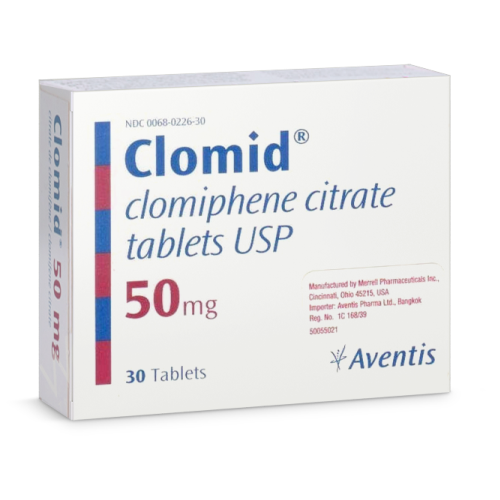
Can Clomid Be Purchased Without a Prescription in the United States?
No, Clomid (Clomiphene) is available in the United States only with a valid prescription from a licensed healthcare provider. Over-the-counter sales of Clomid are not permitted, and purchasing from unlicensed sources is both illegal and unsafe.
Key Takeaways
- Clomid is most effective for women with ovulatory dysfunction who are trying to conceive.
- A prescription is mandatory in the United States; telehealth evaluation is often available.
- Results typically appear within the first three cycles of use if ovulation occurs.
- Some side effects, such as hot flashes or mood swings, are common but usually transient.
- Seek immediate medical attention if you develop visual disturbances, severe abdominal pain, or shortness of breath during treatment.
- Medical evaluation is essential to rule out other causes of infertility before starting Clomid.
How Does Clomid Work in the Body?
Clomid (Clomiphene citrate) is a selective estrogen receptor modulator (SERM) used primarily to induce ovulation in women with certain types of infertility. It works by binding to estrogen receptors in the hypothalamus—the part of the brain responsible for regulating hormones. By blocking these receptors, Clomid tricks the body into sensing low estrogen levels.
In response, the hypothalamus increases the secretion of gonadotropin-releasing hormone (GnRH), which stimulates the pituitary gland to release more follicle-stimulating hormone (FSH) and luteinizing hormone (LH). These hormones promote the growth and maturation of ovarian follicles, leading to ovulation (the release of an egg).
Biochemical pathway: Clomid acts as an estrogen antagonist at the hypothalamic level, causing an increase in endogenous FSH and LH, thereby restoring ovulatory cycles in women with appropriate ovarian reserve. It does not have direct estrogenic activity in all tissues but can behave as a partial agonist in some (e.g., endometrium).
In simple terms: Clomid “removes the brakes” that estrogen naturally applies to the ovulation process. By doing so, it encourages the body to release the hormones needed for egg development and release.
Important: Clomid is effective only in women whose infertility is due to problems with ovulation and who have functioning ovaries and a normal pituitary gland.
When Success Is Not Immediate: Managing Patient Expectations with Clomid
As a reproductive endocrinologist, I find that many patients expect Clomid to produce results after the very first cycle. What often goes unmentioned is that even in the best-case scenario, the chance of pregnancy per cycle is around 15–20%—not dramatically higher than natural conception in fertile couples. Patients sometimes judge the effectiveness of Clomid solely by whether they conceive, rather than by whether ovulation occurs. It’s also common for patients to attribute every physical or emotional change to the medication, when in fact, fluctuations are often related to the hormonal shifts of the cycle itself. One rarely voiced but important question is: “If Clomid induces ovulation but conception doesn’t happen, what are the next steps?” Understanding this distinction helps prevent disappointment and sets realistic expectations about the journey to pregnancy. Open communication is key—treatment is a process, not a guarantee.
Instructions for Use and Dosage
- Standard starting dose: 50 mg orally once daily for 5 consecutive days, beginning on day 3, 4, or 5 of the menstrual cycle as directed by your doctor.
- Maximum daily dose: 100 mg (split as 50 mg twice daily or 100 mg once daily), not to exceed 5 days per cycle.
- If ovulation does not occur: The dose may be increased in subsequent cycles as guided by your physician. Never increase the dose on your own.
- Duration: If ovulation and pregnancy do not occur after 3–6 treatment cycles, further evaluation is warranted, and continuing Clomid beyond 6 cycles is generally not recommended.
- Tablet splitting: Clomid tablets are typically scored and can be split if necessary, but always follow your doctor’s instructions. Some generics may not be scored—check the packaging.
- Elderly and special populations: Clomid is not indicated for postmenopausal women or men; use in women over 40 should be individualized and closely monitored.
- Missed dose: Take the missed dose as soon as you remember the same day. If it’s almost time for your next dose, skip and continue as scheduled. Do not double doses.
Peak effect: Ovulation typically occurs 5–10 days after the last tablet. The length of effect covers one ovulatory cycle.
Does Food or Alcohol Affect Clomid Absorption?
Food: Clomid absorption is not significantly affected by meals, including fatty foods; it can be taken with or without food. Taking it with food may minimize stomach upset for sensitive individuals.
Alcohol: Moderate alcohol consumption (up to one standard drink per day) has not shown major interaction with Clomid, but alcohol can worsen some side effects such as dizziness or hot flashes. Excessive alcohol can negatively impact fertility and should be avoided during fertility treatment.
Grapefruit juice: There is no evidence that grapefruit juice significantly alters Clomid metabolism, unlike with some other medications.
Lifestyle: Smoking, obesity, and extreme exercise regimens can reduce the effectiveness of Clomid. Healthy lifestyle adjustments may improve outcomes.
Who Should NOT Take Clomid? Detailed Contraindications
- Absolute Contraindications:
-
- Pregnancy (Category X, teratogenic risk)
- Liver disease or a history of liver dysfunction
- Unexplained abnormal uterine bleeding (until evaluation rules out serious pathology)
- Ovarian cysts not due to polycystic ovary syndrome (benign/malignant ovarian tumors)
- Known hypersensitivity to clomiphene or any excipients
- Relative Contraindications (Use With Caution):
-
- Endometrial cancer or pituitary tumors
- Thyroid or adrenal dysfunction (must be treated before starting Clomid)
- Visual impairment or preexisting visual disorders (risk of exacerbation)
- Severe depression or psychiatric illness (may worsen mood symptoms)
Why these restrictions? For example, Clomid is metabolized in the liver—existing liver disease can lead to accumulation and toxicity. Ovarian cysts may enlarge or rupture. Visual changes can indicate rare but serious neurologic effects.
Myth vs Reality: Myth: “Clomid is fine for any woman who can’t conceive.” Reality: Only women with specific types of ovulatory dysfunction and no contraindications are candidates for Clomid.
What Side Effects Are Most Common with Clomid?
- Very Common (>10%):
-
- Hot flashes
- Abdominal discomfort or bloating
- Breast tenderness
- Headache
- Common (1–10%):
-
- Nausea or vomiting
- Mood swings or irritability
- Visual disturbances (blurred vision, spots)
- Ovarian enlargement
- Rare (<1%):
-
- Ovarian hyperstimulation syndrome (OHSS)
- Multiple pregnancies (e.g., twins or more; risk ~5–10%)
- Rash or allergic reaction
- Severe vision loss (reversible, but requires immediate discontinuation)
- Very Rare (<0.1%):
-
- Seizures
- Thromboembolic events (blood clots)
- Liver dysfunction
Mechanism: Many side effects (e.g., hot flashes, mood swings) result from hormonal changes induced by increased endogenous estrogen production, as well as antagonism of estrogen receptors in the central nervous system.
What to do: If you experience visual symptoms, severe abdominal pain, breathing difficulty, or signs of allergic reaction, stop the medication and seek immediate medical attention.
Common Patient Mistakes with Clomid and How to Avoid Them
- Not Confirming Ovulation Before Treatment: Some patients start Clomid without a proper diagnostic workup, risking unnecessary exposure and disappointment. Always verify ovulatory dysfunction with your doctor.
- Taking Clomid at Inconsistent Times: Irregular dosing can reduce effectiveness. Take the tablet at the same time each day for optimal hormone stimulation.
- Stopping Treatment Early Due to Mild Side Effects: Hot flashes or mood swings are usually temporary. Discuss with your doctor rather than stopping the medication abruptly.
- Not Following Up with Ultrasound or Lab Testing: Skipping monitoring may result in missed ovulation, unrecognized ovarian cysts, or increased risk of multiple pregnancy. Attend all scheduled visits.
- Doubling Up After a Missed Dose: This can increase side effect risk without improving outcomes. Follow your doctor’s instructions for missed doses.
- Not Informing Physicians About Other Medications: Drug interactions, while uncommon, are possible. Keep your healthcare team fully informed.
- Continuing Use Beyond Prescribed Cycles: Extended use can increase risk of ovarian tumors. Stop after 6 cycles unless explicitly advised otherwise by your doctor.
How Does Clomid Compare to Alternatives?
There are several agents used for ovulation induction in the United States. The main alternatives to Clomid include Letrozole (Femara) and gonadotropin injections. Here’s how Clomid stacks up against them on key parameters:
| Medication | Onset of Ovulation | Duration per Cycle | Common Side Effects | Risk of Multiple Births | Price (per cycle, USD) | Prescription Required? |
|---|---|---|---|---|---|---|
| Clomid (Clomiphene) | 5–10 days after last tablet | 5 days | Hot flashes, headache, mood swings | 5–10% | $20–$60 | Yes |
| Letrozole (Femara) | 5–7 days after last tablet | 5 days | Fatigue, dizziness, joint pain | 3–5% | $30–$90 | Yes |
| Gonadotropins (hMG, FSH/LH) | Variable (daily injections) | 7–14 days | OHSS, injection site pain, headache | 15–30% | $800–$2000 | Yes |
- Clomid is generally the first-line due to cost, oral administration, and extensive safety data.
- Letrozole may be preferred in polycystic ovary syndrome (PCOS) or those who don’t respond to Clomid.
- Gonadotropins are used for more complex infertility but carry higher cost and risk.
Clomid Technical Characteristics Table
| Parameter | Value |
|---|---|
| Active Ingredient | Clomiphene citrate |
| Available Strengths | 50 mg (most common), 100 mg (less common) |
| Formulation | Oral tablet |
| Administration Route | By mouth |
| Storage | Room temperature, 20–25°C (68–77°F) |
| Half-life (T1/2) | 5–7 days (active isomers may persist longer) |
| Manufacturer | Various (original: Sanofi; generics widely available) |
| Packaging | Blister packs or bottles, tamper-evident seal |
Compatibility Check: Clomid with Other Medications
| Type of product | Can it be combined? | Consequences |
|---|---|---|
| Aspirin | Yes | No significant interaction |
| Insulin/Metformin | Yes (with monitoring) | May be co-prescribed in PCOS; inform your doctor |
| Oral contraceptives | No | Counteracts ovulation induction |
| Estrogen replacement | No | Reduces effectiveness of Clomid |
| Alcohol | With caution | May worsen side effects, reduce fertility |
| Nitroglycerin | Rarely used together | No specific interaction, but consult your doctor |
| Herbal supplements | Unknown | Limited data—use caution, discuss with provider |
How Clomid Moves Through the Body (Pharmacokinetics)
- Absorption: Rapidly absorbed from the gastrointestinal tract after oral dosing.
- Metabolism: Primarily metabolized in the liver to active and inactive metabolites.
- Distribution: Highly protein-bound; accumulates in fatty tissues, explaining prolonged half-life of active isomers.
- Elimination: Mostly through feces (bile route); some urinary excretion.
- Half-life: 5–7 days (can be longer for some metabolites, contributing to an extended effect across cycles).
Clinical implications: Liver impairment can slow drug clearance and increase side effect risk. Persistent metabolites are a reason why therapy is limited to short courses.
Special Considerations in Specific Patient Groups
- Liver dysfunction: Clomid is contraindicated due to risk of accumulation and toxicity.
- Kidney impairment: No dose adjustment typically required, but clinical data are limited.
- Obesity: May reduce response; lifestyle modification advised in parallel.
- Advanced age (>40): Lower success rates and increased risk of adverse events; careful assessment needed.
- Driving and machinery: Clomid does not directly impair ability but may cause dizziness or blurred vision; use caution.
- Men: Not FDA-approved for male infertility; off-label use exists but must be managed by a specialist due to different risk profile.
Instructions Step-by-Step: How to Get Clomid in the United States
- Schedule a consultation with a board-certified OB/GYN, reproductive endocrinologist, or qualified telehealth provider.
- Diagnostic evaluation: Your doctor will review your history, perform a physical exam, and order labs and possibly imaging to confirm ovulatory dysfunction and rule out contraindications.
- Prescription: If appropriate, your doctor will electronically prescribe Clomid to a licensed pharmacy of your choice.
- Pharmacy fulfillment: Fill the prescription at a local or verified mail-order pharmacy. Pharmacist counseling is usually provided.
- Monitoring: Follow-up appointments are scheduled for ovulation tracking and side effect management (may include blood tests and ultrasound).
- Repeat cycles: If pregnancy does not occur, your physician may adjust the dose or explore alternative interventions after 3–6 cycles.
Telemedicine: Many fertility clinics and telehealth platforms in the United States offer virtual evaluation and prescription for Clomid, provided that diagnostic records and contraindications are clearly documented.
Online Pharmacy Safety Guide for United States
To ensure safety, only use licensed online pharmacies that are verified by the National Association of Boards of Pharmacy (NABP) or display the .pharmacy domain. These pharmacies require a valid prescription, list a physical address in the United States, and offer pharmacist access.
- Official verification: Check for NABP VIPPS accreditation or the “Digital Pharmacy” seal.
- Warning signs: Avoid sites that sell Clomid without a prescription, lack contact information, use non-secure payment methods, or offer prices far below market value.
- Risks of unregulated sellers: Counterfeit medications, lack of quality assurance, risk of customs confiscation, and absence of legal recourse.
- Consumer protection: In the US, consumer complaints about online pharmacies can be submitted to the FDA’s MedWatch or the Federal Trade Commission (FDA, FTC).
How to Spot Counterfeit Clomid and the Role of Generics
Original Clomid is manufactured by Sanofi (formerly Aventis) and distributed in tamper-proof blisters or bottles with detailed labeling, batch numbers, expiration dates, and often a QR code or hologram sticker for authentication.
Warning signs of counterfeit:
- Unusually low price (below $15 per cycle)
- Packaging with typos, faded print, or missing lot numbers
- No patient information leaflet or manufacturer contact
- Pills of inconsistent size, shape, or color
Generics: Numerous FDA-approved generics (e.g., by Teva, Par Pharmaceutical, Sandoz) are available and contain the same active ingredient, meeting bioequivalence standards. Generics may differ in excipients (fillers, dyes), which rarely cause allergic reactions. Patients with documented allergies should consult a pharmacist about inactive ingredients.
Generics vs. Original: Generics are clinically equivalent to the original Clomid and can provide significant cost savings without loss of efficacy or safety.
Quality Check: How Should Authentic Clomid Look?
- Tablet color: White or off-white; round or oval, depending on manufacturer
- Markings: Scored with manufacturer’s initials and dosage strength (e.g., “CLOMID 50” or similar)
- Packaging: Sealed blister packs or plastic bottles, labeled with the manufacturer, NDC number, and lot/expiration details
- Security features: QR code, hologram, or tamper-evident seal (for most brands in the United States)
- Patient leaflet: Always included; genuine packaging is professionally printed, not photocopied
Overdose Action Plan for Clomid
- Stop use immediately.
- Call Poison Control (1-800-222-1222) or 911 for emergency services in the United States.
- Report the amount and time of ingestion, as well as any symptoms.
- Do not induce vomiting unless instructed by medical personnel.
- Bring the medication packaging to the hospital for verification.
There is no specific antidote; treatment is supportive. Common symptoms may include nausea, vomiting, hot flashes, blurred vision, and ovarian enlargement.
Psychological Support and Infertility
Infertility is a common and highly distressing experience, affecting individuals and couples emotionally as well as physically. You are not alone—many people go through similar challenges. Consider seeking support from a counselor, support group, or discussing your concerns openly with your partner and healthcare provider. Emotional health is a critical part of the fertility journey.
Questions Patients Often Ask doctor Regarding Clomid
- Will I get pregnant the first time I use Clomid?
- While some women do become pregnant after the first course, most require several cycles. About 70–85% of women will ovulate, but the chance of pregnancy per cycle is about 15–20%.
- How will I know if Clomid is working?
- Your doctor may use blood tests or ultrasound to monitor ovulation. Some women notice changes in cycle length or mid-cycle symptoms, but monitoring provides the most reliable confirmation.
- What if I don’t ovulate or conceive after several cycles?
- If there is no response after 3 cycles, your doctor will evaluate for other causes, consider dose adjustment, or discuss alternative therapies such as letrozole or injectable hormones.
- Can Clomid damage my ovaries or cause cancer?
- Short-term use (up to 6 cycles) has not been linked to ovarian cancer. Prolonged, unsupervised use is discouraged due to theoretical risks. Ovarian cysts can occur but are usually benign and resolve after stopping the medication.
- How should my partner and I time intercourse during Clomid therapy?
- Intercourse is typically advised every 1–2 days starting a few days after the last tablet and continuing through the expected ovulation window. Precise timing may be guided by your doctor based on monitoring.
- Is Clomid suitable for use with other fertility treatments?
- Clomid can be combined with other interventions (e.g., intrauterine insemination), but combinations should always be supervised by a fertility specialist to reduce risk of complications.
Professional Assessment by doctor: Clinical Judgment on Clomid Use
In my clinical experience, Clomid is best suited for women with anovulatory infertility who have normal ovarian reserve and no contraindications to hormonal therapy. It is especially effective in those with polycystic ovary syndrome (PCOS) who do not ovulate regularly. However, it is not appropriate for women with diminished ovarian reserve, premature ovarian failure, or for those whose infertility is due to factors unrelated to ovulation (e.g., tubal blockage or severe male factor infertility). I am cautious in using Clomid in women over 40, as response rates decline and risks increase. If there are no results after three cycles, I recommend a thorough re-evaluation and consideration of alternatives like letrozole or injectable gonadotropins, particularly when time is a factor. The decision to use Clomid should always balance efficacy, safety, and patient preferences, with an emphasis on close monitoring and shared decision-making.
Frequently Asked Questions About Clomid
- Is Clomid effective for all types of infertility?
- No; Clomid is effective only for infertility due to ovulation problems. It will not help in cases where infertility is caused by blocked fallopian tubes, severe male factor infertility, or diminished ovarian reserve.
- Can I buy Clomid legally online in the United States?
- You can obtain Clomid from licensed online pharmacies, but a prescription from a US-licensed healthcare provider is required. Avoid unverified websites as they may sell counterfeit products and are not legal.
- How much does a typical cycle of Clomid cost?
- The cost ranges from $20–$60 per cycle for generics; brand-name versions may be more. Some insurance plans may cover part of the cost depending on your policy.
- How long should I use Clomid?
- Most women use Clomid for up to 6 cycles. If pregnancy has not occurred after this period, further fertility evaluation is recommended.
- What should I do if I experience severe side effects?
- Stop the medication and seek immediate medical care, especially for visual changes, severe pain, or breathing difficulty.
- Are there any long-term risks of Clomid?
- Long-term risks are extremely low when used as recommended. Extended use (>12 cycles) may theoretically increase the risk of ovarian tumors, which is why prolonged use is not endorsed.
- Is it safe to use Clomid if I have PCOS?
- Yes, Clomid is commonly prescribed for PCOS-related infertility but might be less effective in women with severe obesity or high androgen levels. Letrozole may be considered in these cases.
- Will Clomid increase my chance of twins?
- Yes, Clomid increases the risk of multiple ovulations. The risk of twins is about 5–10% per cycle, with a very low risk of triplets or higher-order multiples.
- Does insurance cover Clomid?
- Coverage varies widely. Some health insurers in the US will cover the medication and/or monitoring, but not all do. Check with your provider for details.
References
- U.S. Food and Drug Administration (FDA), Clomiphene Citrate Labeling, Accessed 2026. https://www.accessdata.fda.gov
- Practice Committee of the American Society for Reproductive Medicine. “Use of Clomiphene Citrate in Infertility Treatment: A Committee Opinion.” Fertility and Sterility, 2024. https://www.asrm.org
- Legro RS, et al. “Clomiphene, Metformin, or Both for Infertility in the Polycystic Ovary Syndrome.” New England Journal of Medicine, 2024. https://pubmed.ncbi.nlm.nih.gov
- Mayo Clinic, “Clomiphene (Oral Route) Description and Brand Names,” Accessed 2026. https://www.mayoclinic.org
- National Institutes of Health, MedlinePlus, Clomiphene, Accessed 2026. https://medlineplus.gov
- National Association of Boards of Pharmacy, Digital Pharmacy Accreditation. https://nabp.pharmacy
- World Health Organization (WHO), Clomiphene Monograph, Accessed 2026. https://www.who.int